
Speech Therapy
Helping individuals communicate, connect, & thrive
Who Can Benefit from Speech Therapy?
Speech therapy may be helpful for people with any condition that impacts their communication, feeding, or swallowing. Speech-language pathologists are trained to diagnose and provide treatment for challenges with:
Speech
Making clear and correct speech sounds
Language
Using and understanding vocabulary and grammar, understanding what others say, expressing thoughts in a way that makes sense to others, and using language for a variety of purposes
Social Communication
Using and understanding nonverbal communication, knowing how to communicate for a variety of purposes, adjusting social behavior to different situations, using and understanding indirect or nonliteral language
Fluency
The flow of speech, including speed, rhythm, pauses, and repetitions of sounds or words
Cognitive Communication
Cognitive skills that impact communication, such as memory, attention, problem solving, and organizing thoughts or words
Voice and Resonance
How the voice sounds, including pitch, volume, endurance, and quality (for instance, a voice may sound breathy, strained, rough, muffled, nasal, etc)
Feeding and Swallowing
Mealtime safety and efficiency, swallow strength and coordination, and nutrition variety
What Does Speech Therapy at Adagio House Look Like?
Evaluations are performed 1-on-1 with the client and therapist. They are typically scheduled for 90 minutes, although they may not take that long for less complex concerns. Caregivers may stay throughout the evaluation, or they may be asked to be present at the beginning and end of the evaluation to answer background questions and discuss results, depending on the client’s needs.
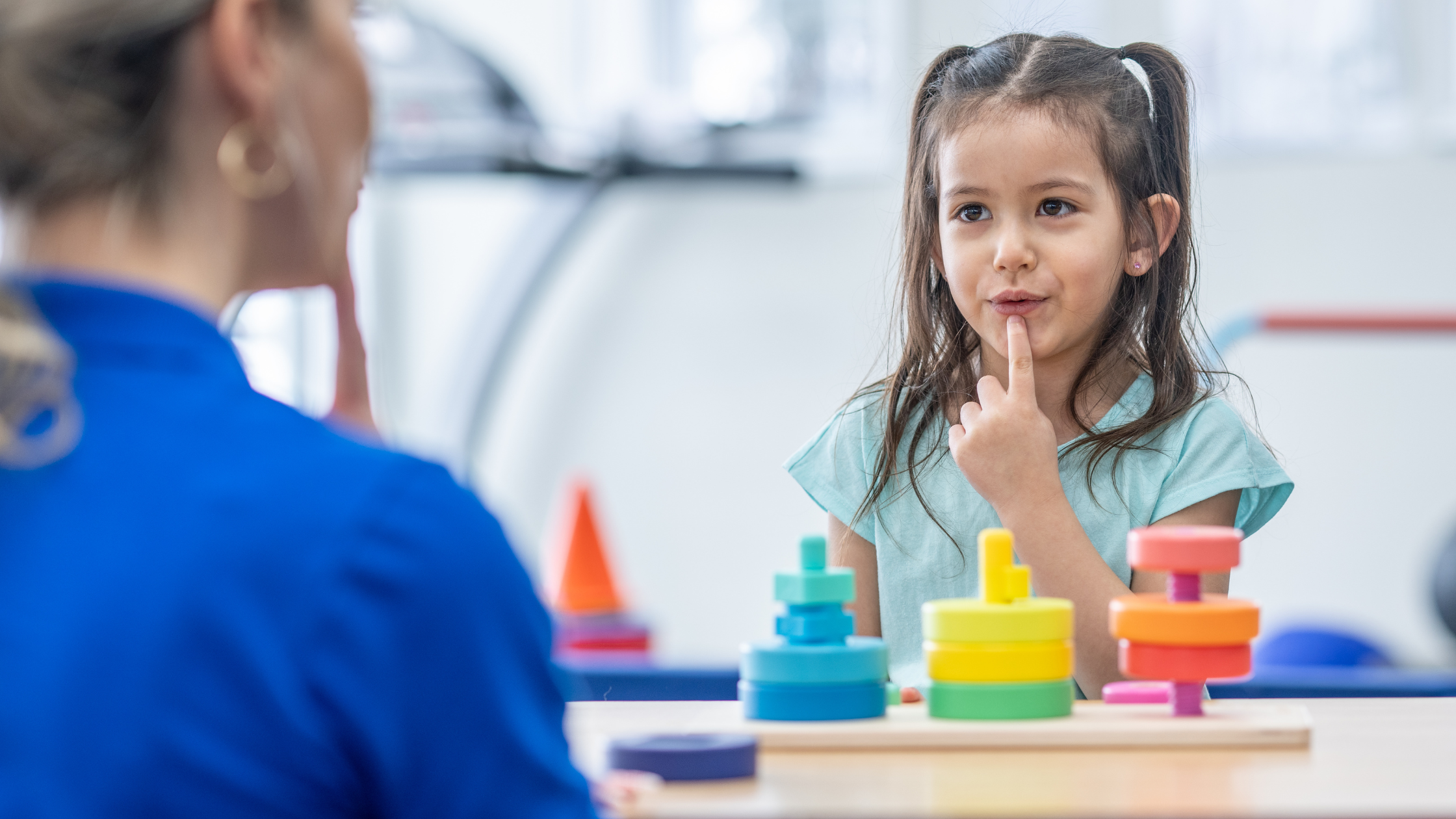
Treatments are typically provided 1-on-1 for 30 minutes. Treatment frequency and length will be recommended based on evaluation results and progress. Caregivers may be present during treatments or may wait outside the therapy room, depending on the client’s needs. Most treatment with younger clients involves games or toys that can be used to support skill-building, and most treatment with older clients focuses on practice with strategies to improve functional skills and independence (which can also involve games, if desired!)
Therapy is provided using a variety of evidence-based methods that are tailored to each individual client’s and family’s needs, preferences, and values. Some treatment principles used at Adagio House are:
Child-led, play-based, and naturalistic therapy for children with language delays or disorders, promoting language development through an engaging and relaxed environment.
Recognition of the various functions of echolalia (the repeating of what other people have said, also sometimes called gestalt language) and supporting clients who use echolalia in their development of flexible, self-generated language (using their own words).
Emphasis on building self-advocacy skills and communication confidence in treatment for fluency and social communication.
Caregiver coaching on strategies to support their loved one’s communication and/or feeding.
Working with teens and adults with disabilities to build skills and strategies that allow them to participate in activities that matter to them and increase their independence in daily life as much as possible.
Using the principles of motor learning to treat apraxia of speech and other speech sound disorders involving motor skill difficulties (examples of these approaches are Dynamic Temporal and Tactile Cueing (DTTC) and Prompts for Restructuring Oral Motor Phonetic Targets (PROMPT)).
A responsive approach to feeding therapy that supports mealtime safety, nutritional variety, autonomy, and building a healthy relationship with food, as well as reducing caregiver stress.
Speech Therapy Services at a Glance
Who?
Clients of any age with concerns about their communication, feeding, and swallowing
Services are primarily offered for toddlers through young adults
What?
Evaluations of speech and language
Most evaluations will assess speech and language and screen for other concerns.
Evaluations of fluency, social communication, voice and resonance, and cognitive communication will be provided if concerns are noted.
Evaluations to inform autism assessment
Identifying need for further assessment and referrals
Differentiating between speech or language delays and autism
Ruling out or documenting the presence of social communication challenges associated with autism
Evaluations of feeding and swallowing
Feeding and swallowing evaluations are performed separately from speech and language evaluations. If you are receiving a feeding and swallowing evaluation only, other concerns will be screened for but not fully assessed.
Treatment
Primary services offered for:
Communication challenges related to autism, ADHD, intellectual disabilities, and other developmental disabilities
Language
Speech sound production
Social communication
Fluency (stuttering or cluttering)
Services also available for:
Communication challenges related to hearing loss, stroke, brain injury, or dementia
Pediatric feeding
Swallowing
Voice and resonance
About the Speech Therapist
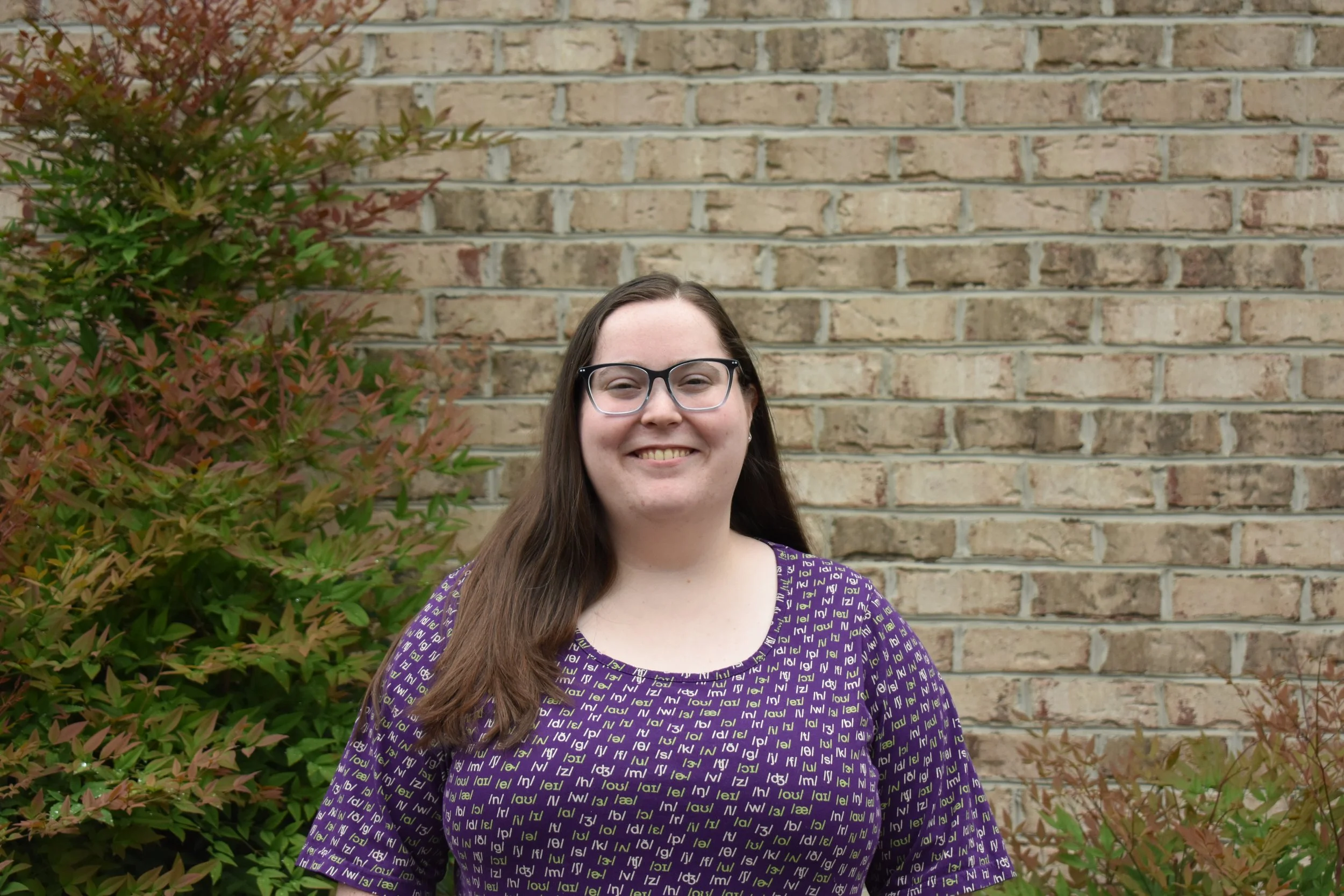
Speech therapy services at Adagio House are provided by Caitlin McCaslin, M.S., CF-SLP (clinical fellow in speech-language pathology). Caitlin earned her master’s degree in Speech-Language Pathology from JMU in 2026, and she finished her bachelor’s degree in Linguistics and Biology at William & Mary in 2023.
As part of her graduate education, she completed semester-long internships at Bessie Weller Elementary School and Sentara RMH in acute care. While Caitlin grew up in Gainesville, VA, her experiences locally have made her interested in settling down in Harrisonburg.
Caitlin is especially passionate about working with children with developmental language disorder, autism, and other developmental disabilities. She also loves working with neurodivergent individuals of all ages, AAC users, and children with complex and multifactorial speech sound disorders.
Caitlin enjoys staying up to date with research– she was given the superlative “most likely to get excited over a new journal article” from her classmates in graduate school. She is particularly interested in research about language development, neurodiversity, and linguistic features in autism. She remains involved with research at JMU about the experiences of people who use the term “neurodivergent” to describe themselves and how to provide therapy that promotes both successful communication and a positive self-image in neurodivergent people (neurodiversity-affirming care).